Gariūnai Viaduct Reconstruction: First-Hand Impressions
Gariūnai Viaduct Reconstruction: First-Hand Impressions
Built in 1981, the Gariūnai Viaduct in Vilnius is undergoing a full reconstruction after 45 years. The first half has already been renewed, and now the second half has also been demolished. In its place, a completely new structure meeting modern requirements will be built.
It is always great to celebrate a successfully completed project. But not everyone sees how interesting and complex the journey to the final result can be. Tilsta Project Manager Edvinas Mikianec shares how one of the most impressive stages of the Gariūnai Viaduct reconstruction took place – the demolition of the second part of the old bridge.
We thank Edvinas for the interesting story, and Via Lietuva for capturing the moments.
Another Important Stage Completed
When preparing the overall work schedule for the site, we set ourselves the goal of opening traffic on the new northern Gariūnai Viaduct in mid-September. And I can confidently say – we achieved that goal.
It required a great deal of work, good coordination and a very well-aligned team. On 31 August, the first asphalt arrived at the site, and from that day until 17 September, when traffic began moving across the new viaduct, an enormous amount of work was completed: asphalt paving, painting, installation of safety barriers, preparation of the new section, traffic management schemes, signs and road markings. Everything had to be done in such a way that once traffic was opened, everything would be clear and safe for road users, with no additional questions.
Then came the day we had been waiting for – 18 September. From early morning, the milling machine was working, and everyone was busy preparing for the night. Everything that could interfere with the demolition had to be removed from the old viaduct – safety barriers, railings, signs and everything else.
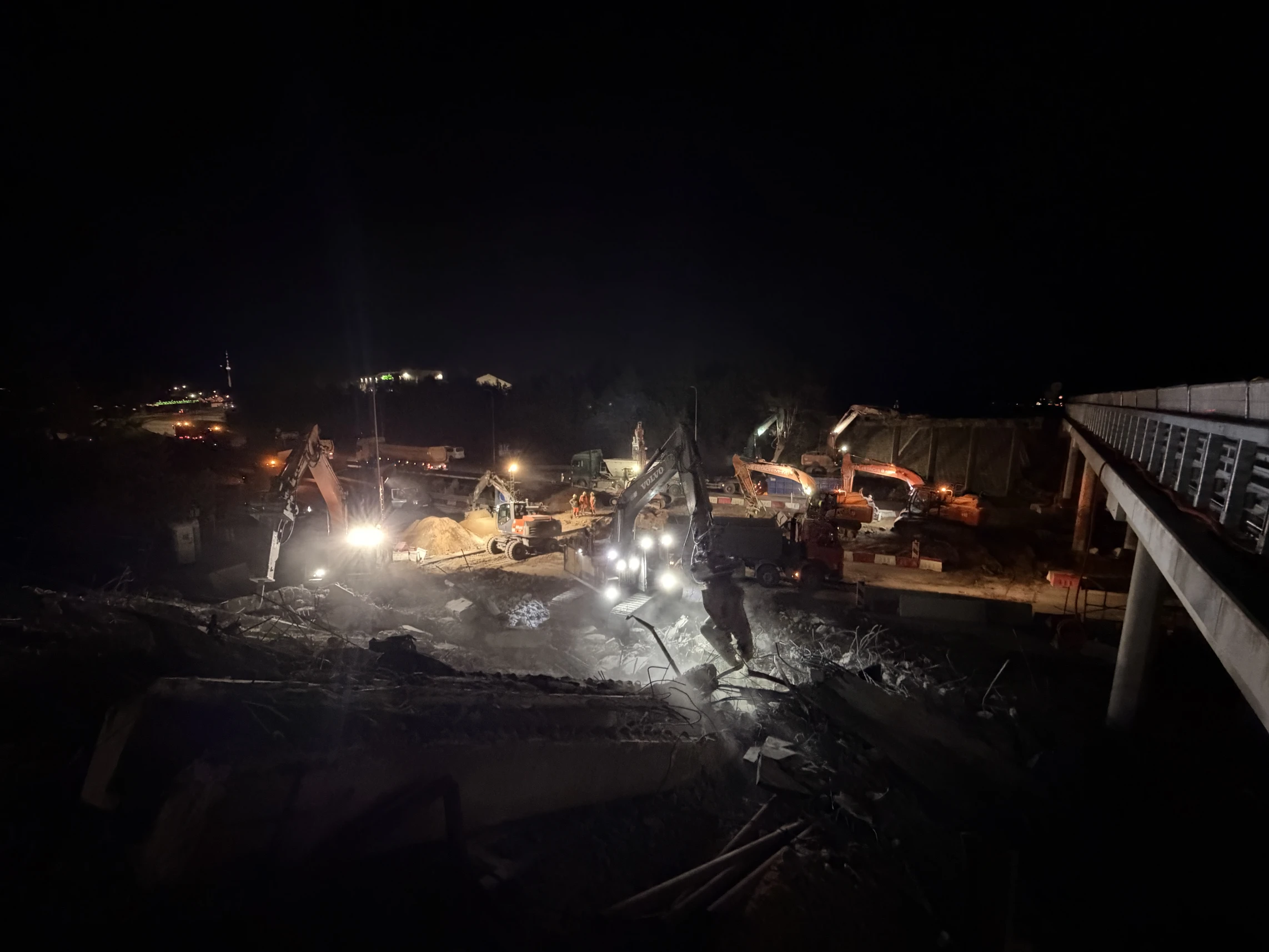
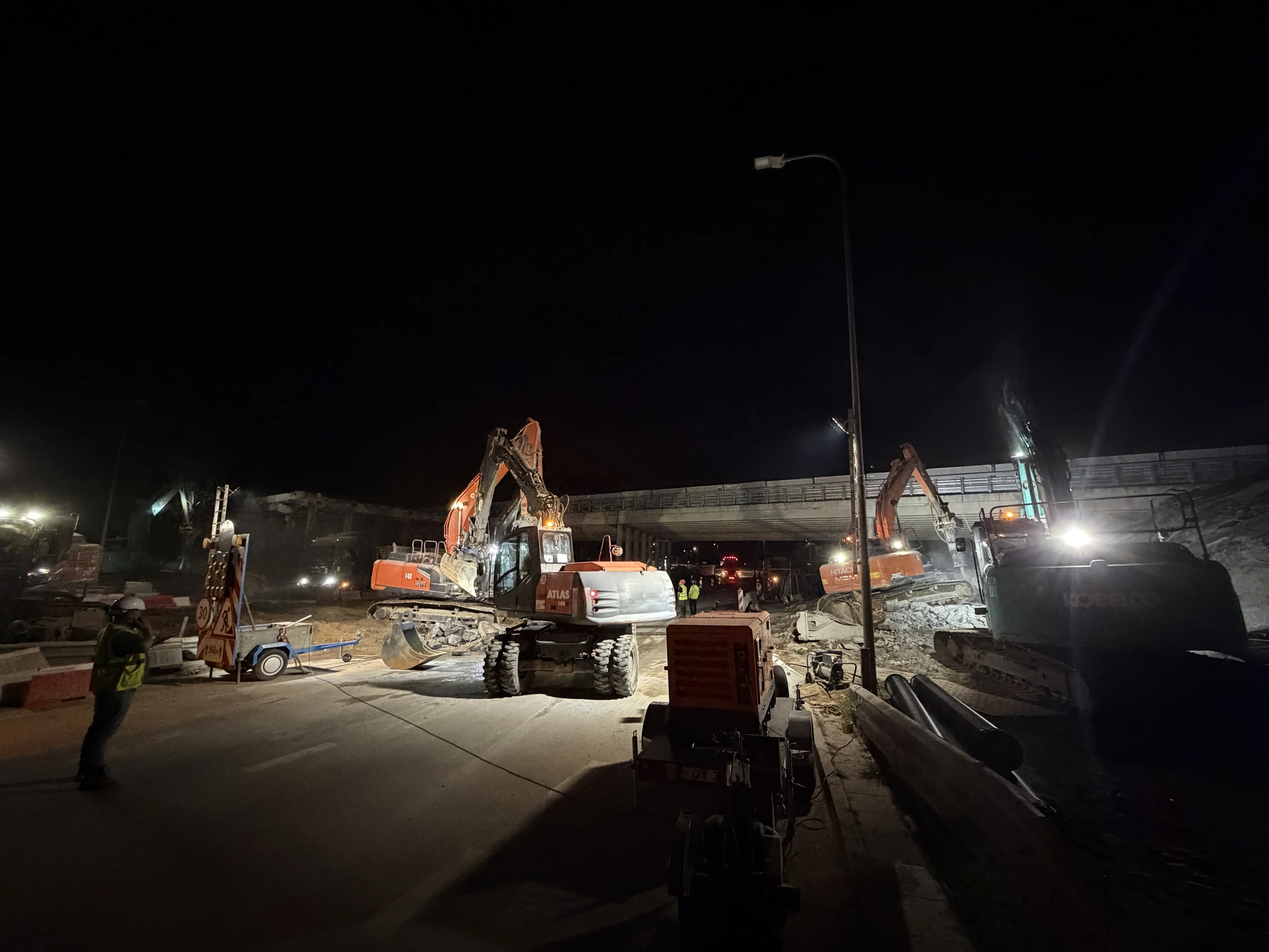
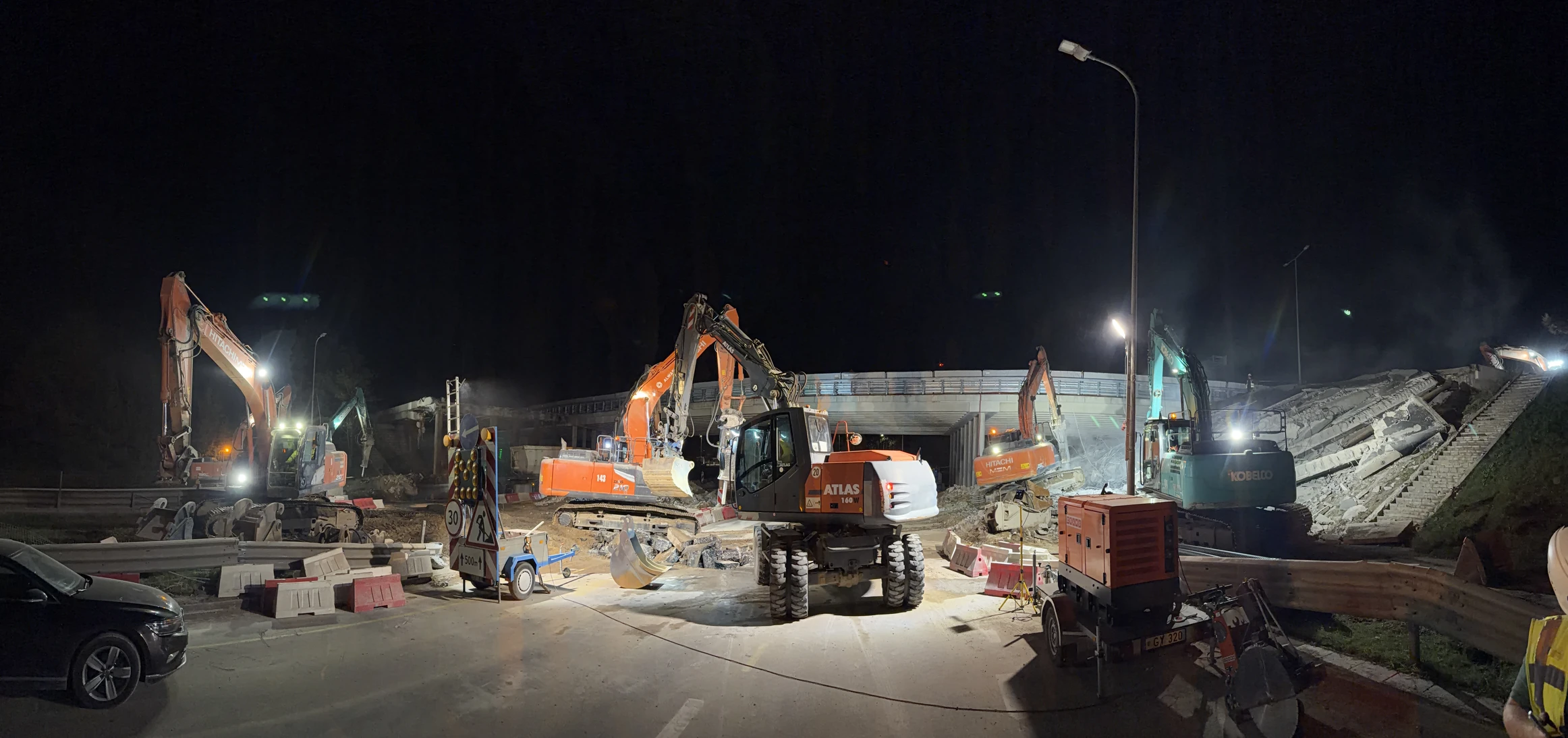
At 8:30 p.m., traffic was closed to everyone except public transport, and the final preparatory works began. At 9:00 p.m., traffic was closed completely and the serious work began. Nine excavators started working on the old, barely standing viaduct at the same time, beginning to dismantle it.
At the same time, taking advantage of the traffic closure on the A19 road, Fegda together with colleagues from Požeminės sistemos took on another task – cutting across the A19 so that stormwater drainage lines could be installed. Everyone was working at full capacity.
By 5:00 a.m., the site already smelled of freshly laid asphalt, while the A19 road was being cleared of concrete, reinforcement and everything we had managed to break out during the night. At 6:30 a.m., traffic was reopened.
We went home, had just enough sleep for one dream, and then went back to work. On 19 September, we continued dismantling, breaking out the remaining foundations and preparing everything so that on 22 September, the pile drilling crews could already enter the site.
And today we can confidently say – we are starting a new stage.
Gallery